- Home Page
- Advice and Planning
- Your First Long-Distance Walking Holiday
Your First Long-Distance Walking Holiday: What to Expect
If you're considering your first long-distance walking holiday, you may be wondering whether it's going to be quite different from the walks you normally do at home.
In some ways, it isn't. You're still putting one foot in front of the other, following a route and enjoying the places you pass through.
The difference is that you don't finish your walk and drive home. You arrive at your accommodation, spend the night and continue your journey the following morning.
That simple change is what makes a walking holiday such an enjoyable experience.
Here's what to expect and how to prepare.
You don't have to walk enormous distances
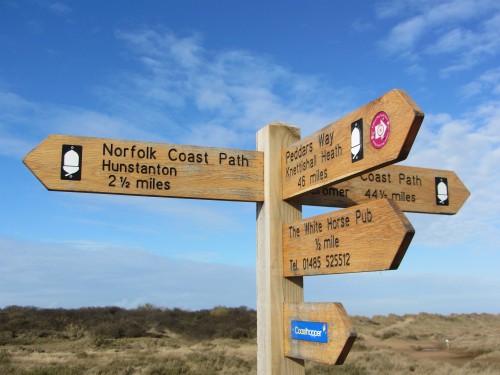
One of the biggest misconceptions about long-distance walking holidays is that you need to cover fifteen or twenty miles every day.
You don't.
Many walking holidays can be divided into stages of around eight to twelve miles, and some itineraries offer shorter days.
The important thing is choosing distances that suit the walking you already enjoy.
If you regularly walk six or seven miles, you may want to build up gradually before booking a holiday with longer stages.
If ten or twelve miles is already a comfortable distance for you, you'll have more options.
I'd concentrate on the distance you enjoy walking rather than the greatest distance you've ever managed.
The first day may feel quite different
There's something rather satisfying about setting off on the first morning knowing that you're walking to somewhere new.
You're not doing a circular walk and returning to your car.
Your accommodation is waiting further along the route.
That gives the day a sense of purpose, even if you're walking a relatively short distance. And on many walks you can see where you’ve walked the day before, which gives you a real sense of achievement.
You may also find yourself paying more attention to the landscape because you're travelling through it rather than returning along familiar ground.
What happens at the end of each day?
On a self-guided walking holiday, you'll arrive at your pre-arranged accommodation in the afternoon.
You can check in, have a shower, change into comfortable clothes and find somewhere for dinner, or you may have already booked a table in the accommodation you’re staying at, or in the town or village you’re at. Many of these details are in the daily itineraries if you book a holiday through Norfolk Walking Holidays.
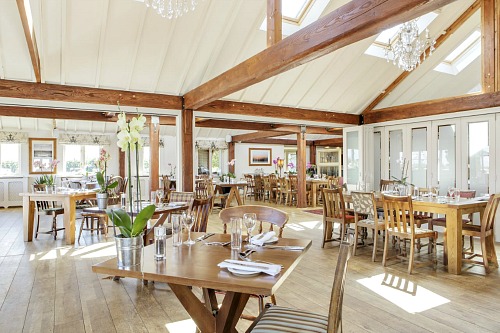
Your main luggage will have been transferred according to your holiday arrangements, so you don't have to carry everything with you while walking.
The next morning, you'll have breakfast, collect what you need for the day and continue along the trail.
It's a straightforward routine!
Will I be tired after several days?
Possibly, particularly if you're not accustomed to walking on consecutive days.
You might feel fine after the first day but notice tired legs or feet by the third morning.
That's perfectly normal after an unfamiliar amount of activity, although persistent or worsening pain shouldn't simply be ignored. Or you may find you feel fitter as you get more used to the daily walking.
The best preparation is to do some consecutive walking days before your holiday. For example, if you're planning to walk ten miles a day, try walking a reasonable distance on Saturday and again on Sunday.
You'll learn much more about how you feel on the second day than you would from one exceptionally long walk.
Do I need to train?
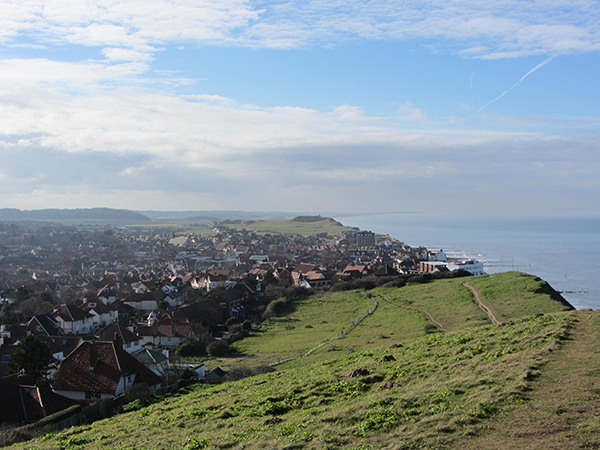
You don't need a complicated training programme, but I would definitely recommend some preparation. In Norfolk, I personally find it difficult to train if I’m going to walk somewhere like the South West Coast Path for example, because we have no hills to walk up and that doesn't really get the glutes going (and I don't like gyms!). So if you live somewhere that is hilly, you should find your exercise will be fine!
The photo above is about the highest you're going to walk in Norfolk (207 feet), and there are only 2 of these "hills" on all of the Norfolk trails!
Build up your walking gradually, using the footwear and day pack you intend to bring. And try different surfaces where possible and get used to spending several hours on your feet.
If you're planning a coastal walking holiday, remember that sand, shingle and wind can affect how a walk feels.
The aim isn't to become exceptionally fit. It's to arrive feeling confident that the distances you've chosen are comfortable for you.
What if I get lost?
On a self-guided holiday, you're responsible for following the route, so you should be comfortable using the route information provided. However, you'll be glad to hear that the trails in Norfolk are well signed, but you should still a map of some sorts, be that a paper OS map, the OS booklet and the guidebook, which you would receive anyway if you book a holiday through us.
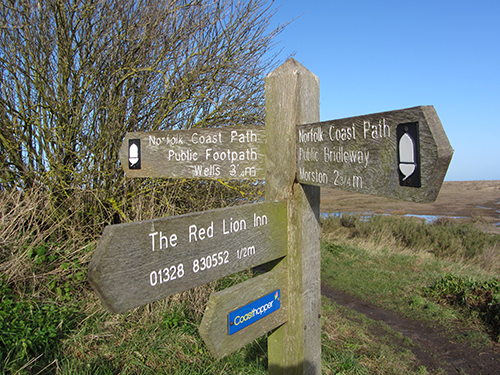
Check your route before setting off, make sure your phone is charged and carry a suitable backup for navigation.
If you're uncertain about a turning, stop and check rather than continuing and hoping for the best.
Most established long-distance trails have waymarking, but signs can sometimes be missed, damaged or hidden by growing vegetation.
A little attention at junctions usually saves a lot of unnecessary extra walking.
What about food and drink?
This is something worth checking each evening, although details are always in the itinerary you receive when booking.
Don't assume there will be a café or shop at exactly the point where you want lunch.
Some Norfolk trails pass through villages with plenty of facilities, particularly on the North Norfolk Coast Path. Others have long rural sections with very few places to stop.
Look at the following day's route and arrange lunch or snacks if necessary and always carry enough drinking water for the conditions and the distance.
What if the weather is poor?
You may well come across rain, wind or unexpectedly warm conditions - we all know what the British weather is like. And looking at a weather app isn't always helpful!
However, as we know, that's part of walking outdoors, but you don't have to be uncomfortable.
Bring suitable clothing, check the forecast so at least you have a rough idea, and be prepared to adjust your plans if conditions become nasty.
A walking holiday should be enjoyable, not an exercise in carrying on regardless. Taxi numbers are always included in the itineraries and buses along the Norfolk Coast Path are very regular (particularly on the North Norfolk coast).
What if I can't finish a day's walk?
It's sensible to know your options before setting off. Depending on the route and where you are, public transport or a taxi may provide an alternative.
However, some rural Norfolk locations have limited transport, and taxis may need to be booked in advance.
If you're worried about completing a particular stage, it's much better to consider that when choosing your itinerary rather than leaving it until you're halfway through the day.
Is Norfolk a good place for a first walking holiday?
Norfolk has several long-distance trails that work well as walking holidays.
The Norfolk Coast Path offers coastal scenery, wildlife and villages, while the Peddars Way is quieter and more rural.
The Weavers Way takes you through varied countryside and the Norfolk Broads, and the Walsingham Way offers a shorter journey with a definite destination.
Each has its own practical considerations, so I'd start by choosing the route that interests you most and then look carefully at the daily distances.
What I would tell someone booking their first walking
holiday
- Don't feel you need to prove anything by choosing the longest days.
- Allow yourself time to stop, explore and enjoy the places you're walking through.
- Prepare with a few regular walks, bring comfortable footwear and check the practical arrangements before you travel.
Above all, remember that a walking holiday is a holiday.
You should finish each day looking forward to the next one, rather than simply being relieved that you've reached your accommodation.
If you're deciding which trail to try first, our guide to choosing a Norfolk walking holiday is a good place to start.
CONTACT DETAILS:
Suzy Watson
+44 (0)7765 668188
walks@norfolkwalkingholidays.com
Feel free to contact me and we can discuss further



Keep up to date with our latest Norfolk Walking Holiday news
Copyright © norfolkwalkingholidays.com; 2014 –